Delaying increased contributions to a retirement plan can actually boost retirement savings, but it all depends on how the delay is positioned.
Summary
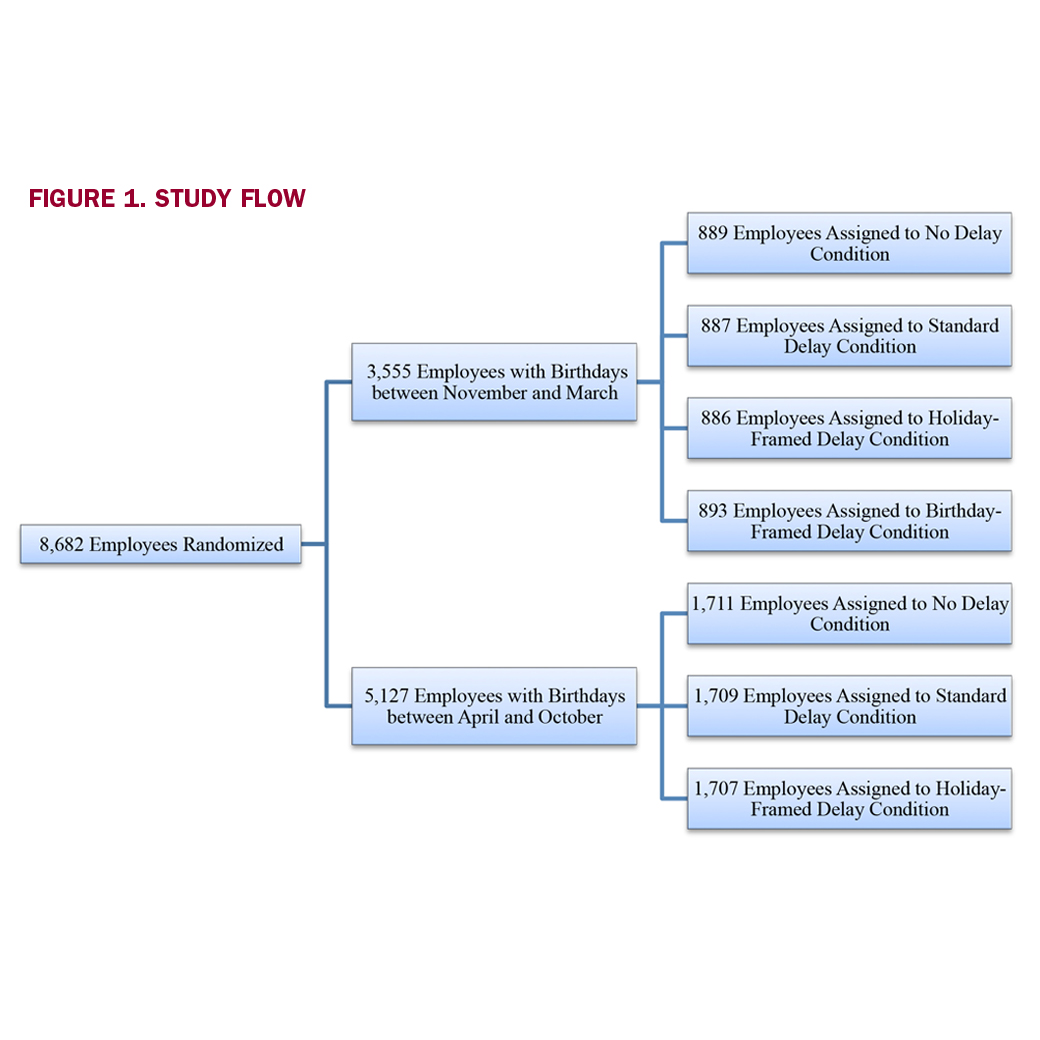
The authors found that employees who are offered a convenient way to increase their contribution rates, either immediately or at a delayed time, are no more likely to accept an increase than employees offered only an immediate option. In fact, the former group tends to save less over the coming months, as the delayed option attracts some employees. However, when the delayed option is tied to a psychologically meaningful event, such as an employee’s next birthday, the negative effect of offering a delay is undone.
Key Insights
- Rather than offering a standard time delay to increase savings (e.g., "in two months"), linking a delay to a meaningful future event can motivate employees to save more.
- When the delay is framed in terms of an employee’s birthday, the increase in savings over the unframed delay is statistically significant.
- Framing the delay in terms of a holiday leads to a greater increase than that generated by an unframed delay, but the difference is not statistically significant.
- Offering a standard delay option (without a temporal landmark) does not lead to an overall increase in savings.