Procrastination is more than just putting off everyday tasks—it can have lasting consequences for financial security, health, and overall well-being. New research from the TIAA Institute examines how this behavioral tendency shapes critical retirement decisions, estate planning preparedness, and health outcomes among older Americans.
Summary
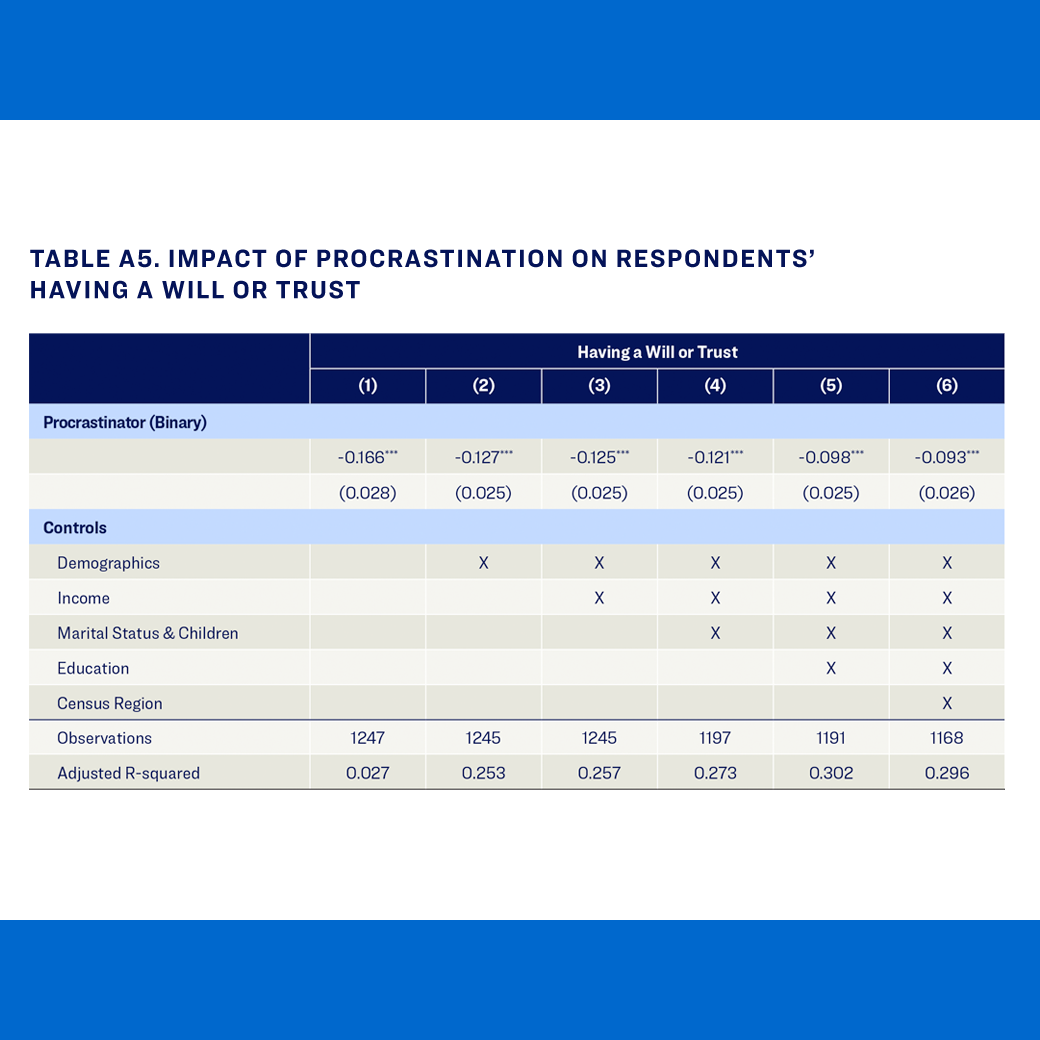
Does having procrastination tendencies impact financial and health decisions? Examining survey data from individuals 50 and older, we examine how procrastination measure is related to to important financial and health decisions. Procrastination scores were dichotomized at the sample median to classify participants as procrastinators or non-procrastinators. The analysis shows that procrastinators face significant challenges in retirement readiness. They are less likely to create wills or trusts, plan bequests, or report satisfaction with retirement. These findings highlight important opportunities for intervention through commitment tools, simplified planning processes, and targeted financial education to help individuals overcome procrastination and improve retirement outcomes.
Key Insights
- Procrastinators are 9.3 percentage points less likely to have a will or trust, leaving them unprepared for end-of-life financial arrangements and missing opportunities to benefit their families
- Those who procrastinate report significantly lower retirement satisfaction and describe themselves as being in worse health compared to their non-procrastinating peers
- Education and ethnicity emerge as key demographic indicators: Individuals with less than a high school education are nearly three times more likely to procrastinate compared to those with college education, while those identifying as Hispanic show a 20% higher likelihood of procrastination