As enrollment declines hit nearly every sector of higher education, institutions with 30,000 or more students have bucked the trend, gaining more than 750,000 students between 2011 and 2021. This report asks the critical question: is simple size preference driving that migration, or is something else at work?
Summary
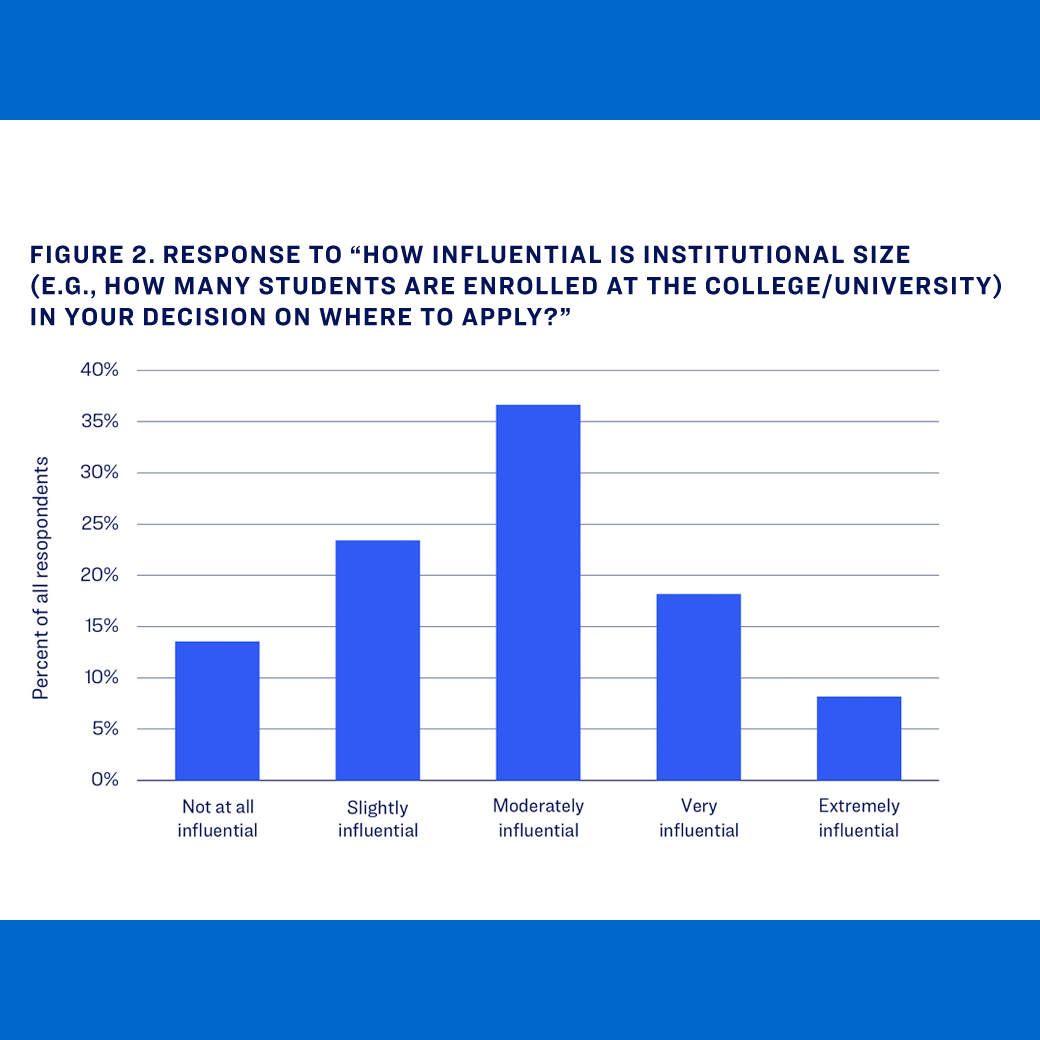
A 2025 survey of nearly 1,500 prospective students conducted reveals that institutional size plays a moderate, but not dominant, role in college selection. While 63% of respondents said size was at least moderately influential in their application decision, only 12% ranked it among their top five deciding factors. Only about 14% expressed a preference for very large schools with 20,000 or more students and most favored institutions under 10,000 students. Students prioritized academics, program options, and net cost over institution size. These findings suggest that the ongoing enrollment growth at very large institutions is driven less by simple size preference and more by those institutions' ability to compete across multiple dimensions.
Key Insights
- Value and outcomes drive decisions: Approximately two-fifths of respondents prioritized overall value for the cost (44%), financial aid packages (41%), flexible program formats (39%), and academic quality (39%) when selecting an institution.
- Traditional students lean larger: Traditional undergraduate students were significantly more likely to prefer large or very large institutions compared to nontraditional students, who more frequently favored smaller schools.
- Enrollment growth reflects competitive edge, not size preference: The data suggest that very large institutions are gaining students primarily because of their ability to offer greater program options, resources, and opportunities,not because students inherently prefer their size.