This TIAA Institute research explores how chronic health conditions and self-perceptions of health shape financial well-being and retirement readiness, and why those connections matter for individuals, advisors, and policymakers alike.
Summary
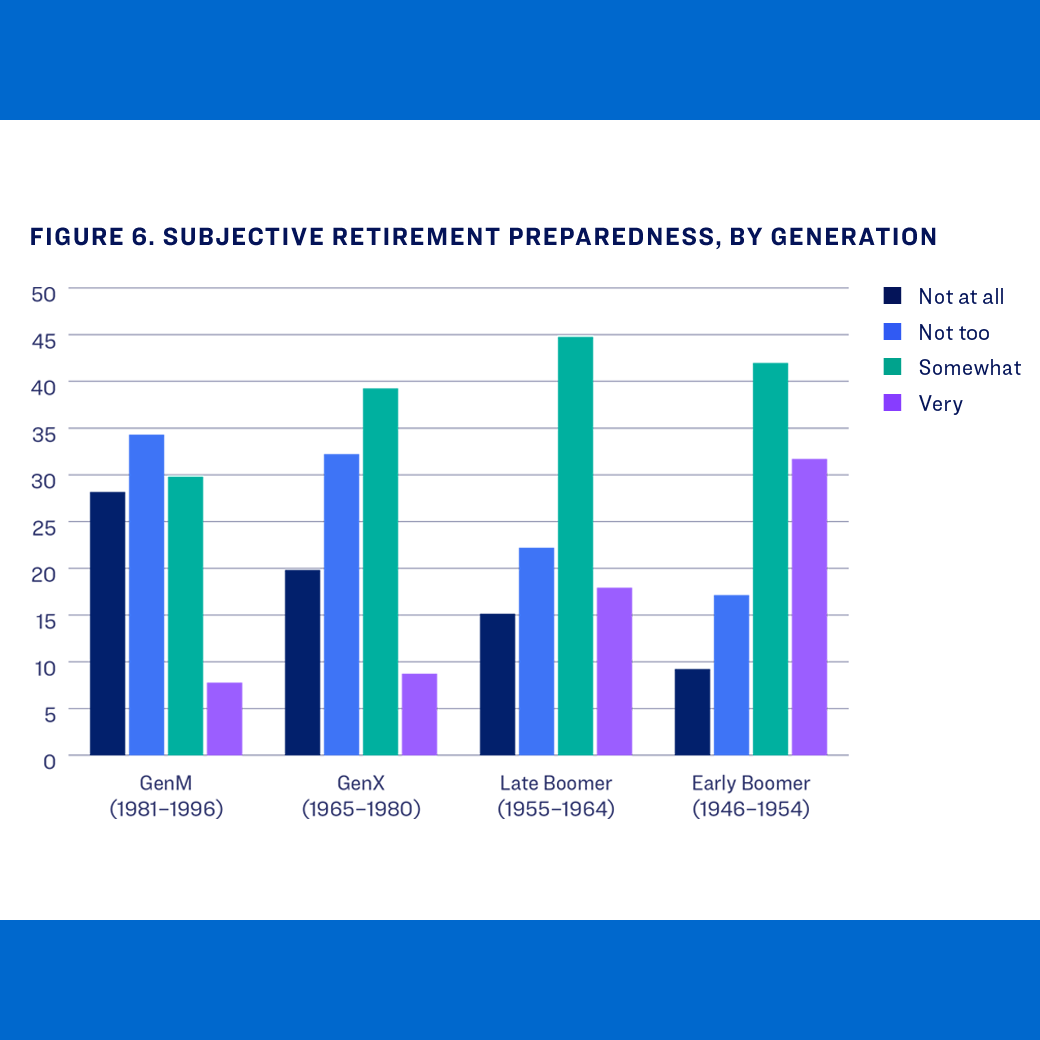
Using data from the Understanding America Study, this research examines how health, both objective and perceived, relates to the financial wellbeing and self-assessed retirement preparedness across four generations. The study finds that chronic conditions negatively impact financial well-being both directly and through objective measures as well as self-perception. Even after controlling for objective health and a wide range of individual characteristics, self-perceived health remains a strong, independent predictor of financial outcomes. Individual traits such as cognitive ability, personality, financial self-efficacy, and time preferences further shape the health-finance relationship, and these patterns hold consistently across millennials, Generation X, and baby boomers.
Key Insights
- How you feel about your health matters financially. People who rate their health as excellent score significantly higher on the CFPB Financial Well-Being Scale than those in poor health, a consistent gap across all four generations studied.
- Chronic conditions hit finances on two fronts. Metabolic conditions and psychological problems are linked to lower financial well-being both directly, through reduced earnings and out-of-pocket costs, and indirectly, by lowering individuals' self-perceived health.
- Mental health carries the heaviest financial burden. A history of psychological problems has among the largest combined effects on financial well-being of any condition studied, surpassing most physical health conditions.