A new TIAA Institute study examines how first-generation, low-income (FGLI) college students come to understand financial planning, retirement, and wealth building through the lens of family stories and lived experience. Drawing on in-depth interviews with 40 students at an elite Northeast college, the research reveals the financial narratives that shape their money mindset long before they enter the workforce.
Summary
This qualitative study explores how first-generation, low-income undergraduates (FGLI) form their understanding of money, saving, and retirement through the stories and values passed down by their families. The study uses narrative interviews to examine how sacrifice, frugality, cultural and religious beliefs, and a sense of responsibility to family shape students' financial thinking. The findings show that FGLI students often bring strong instincts for saving and caution around spending, yet have had little exposure to formal retirement systems or investment vehicles. Many balance present-day family obligations, including a stated intent to financially support parents or relatives later in life, with a desire to build long-term stability for themselves.
Key Insights
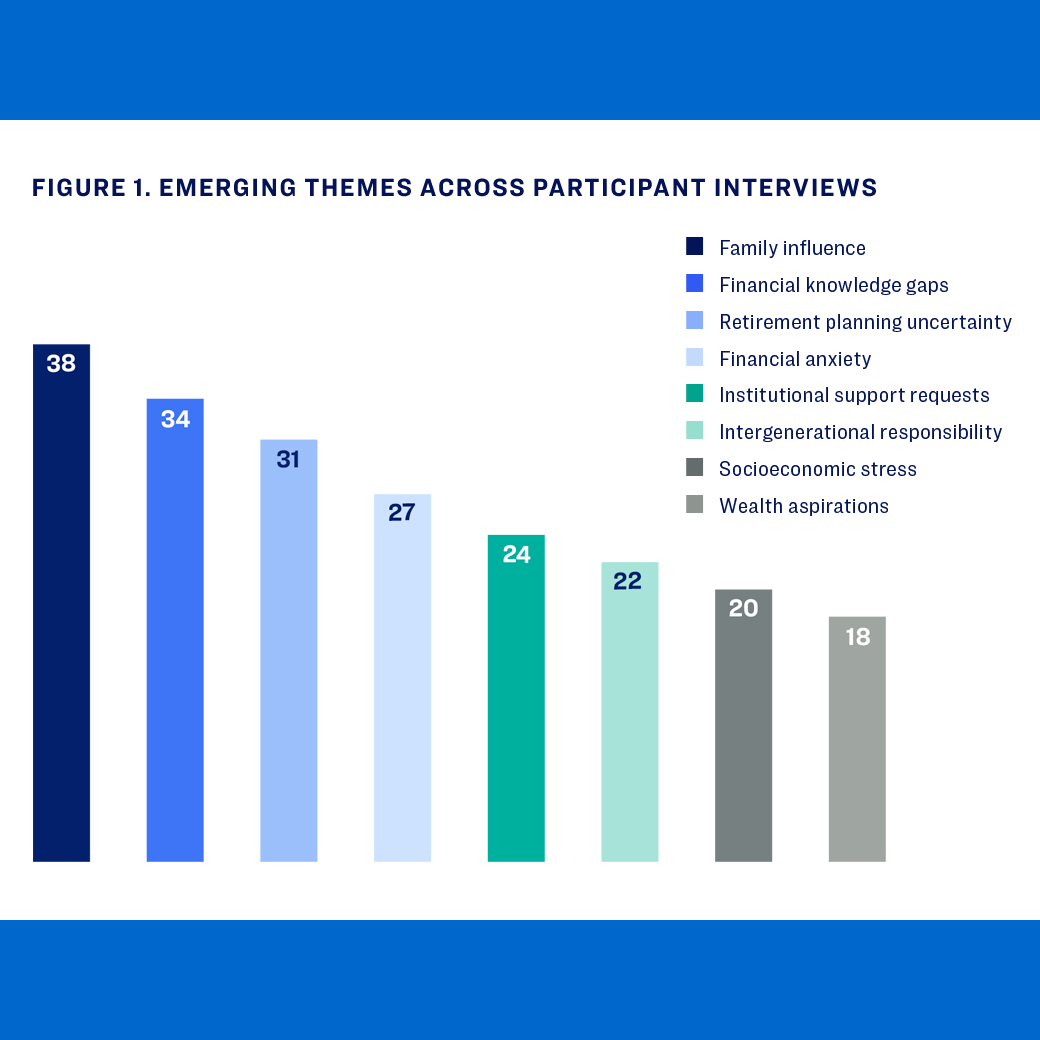
- Family values around money, most often centered on sacrifice, frugality, and saving "for a rainy day," were the most frequently cited influence on students' financial outlook, appearing in 38 of 40 interviews.
- Participants reported far greater confidence in basic saving habits than in retirement planning or investing, revealing a gap between everyday money management and long-term financial knowledge.
- Cultural, religious, and immigration-related beliefs, including views that equate investing with gambling, shaped how some students approached risk and wealth accumulation.
- A majority of students expect to financially support parents or extended family in the future, adding a layer of intergenerational responsibility to their own financial planning.
- Students consistently asked for more practical, accessible financial education, such as workshops on retirement accounts, investing, and budgeting, integrated directly into campus life.