The TIAA Institute, in partnership with Ipsos, explores the significant gaps between retirement expectations and reality, and what workers, retirees, and advisors can do to close them.
Summary
Drawing on a nationally representative survey of 1,591 U.S. adults ages 22–75, this research uncovers a five-year difference between when current retirees, on average, actually left the workforce (age 57) and when future retirees expect to retire (age 62), with half of those planning to retire anticipating they'll need to delay even further. Future retirees are shifting away from traditional income sources like Social Security and pensions, planning instead to rely more heavily on personal savings and continued employment. Career interruptions remain a significant but underappreciated threat to retirement security, as half of U.S. adults have left the workforce for more than a year. While just one in four Americans currently works with a financial professional, those who do report greater confidence, fewer regrets, and a more positive outlook on retirement planning. Growing openness to AI-powered financial tools presents a meaningful opportunity to extend quality guidance to more Americans across all income levels and life stages.
Key Insights
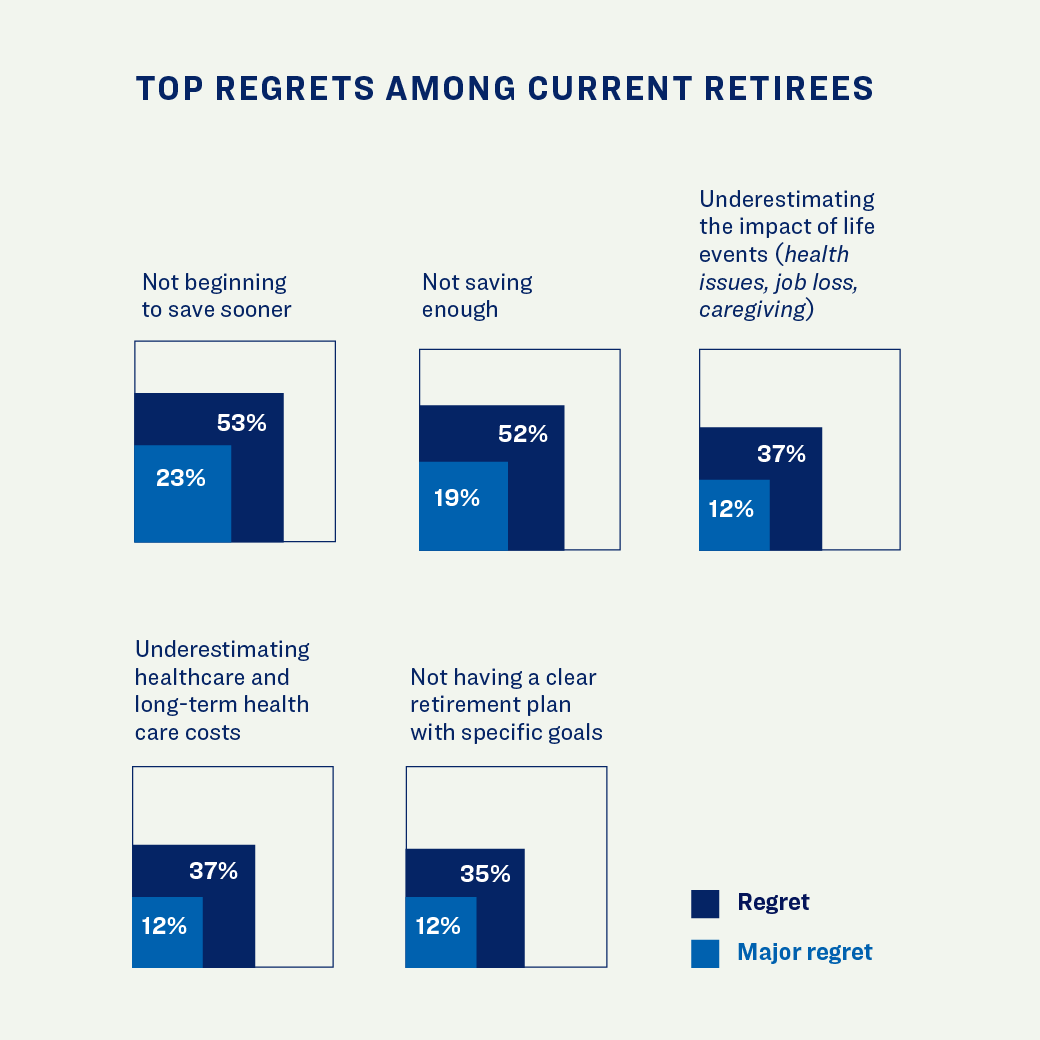
- Retirement regrets point the way forward. More than half of current retirees regret not saving sooner or enough, and nearly four in ten wish they had better accounted for life events such as health issues, job loss, or caregiving responsibilities.
- Confidence in Social Security is eroding across generations. While 94% of Boomers planning to retire expect to rely on Social Security, only 51% of Gen Z anticipates doing so signaling a fundamental shift in how younger Americans are approaching retirement income planning.
- Career interruptions threaten retirement readiness. Half of U.S. adults have left the job market for more than a year, and 77% have changed employers at least once, with one in four leaving before fully vesting, forfeiting valuable employer match contributions.
- Working with a financial advisor makes a measurable difference. Those with a financial professional are nearly twice as likely to feel secure, confident, and excited about retirement planning, and report significantly fewer financial regrets compared to those without an advisor.
- Digital tools offer a pathway to broader access. Four in ten Americans are open to using AI tools for money management and retirement planning, and nearly six in ten of those who already work with a financial professional support their advisor using AI signaling broad potential to scale personalized guidance.