This research examines the critical role healthy spouses play in providing informal long-term care and how their sudden incapacitation affects demand for Medicare-funded formal care. Using novel Medicare data linking married couples, the study provides new evidence on the economic value of informal caregiving and its implications for optimal health insurance design.
Summary
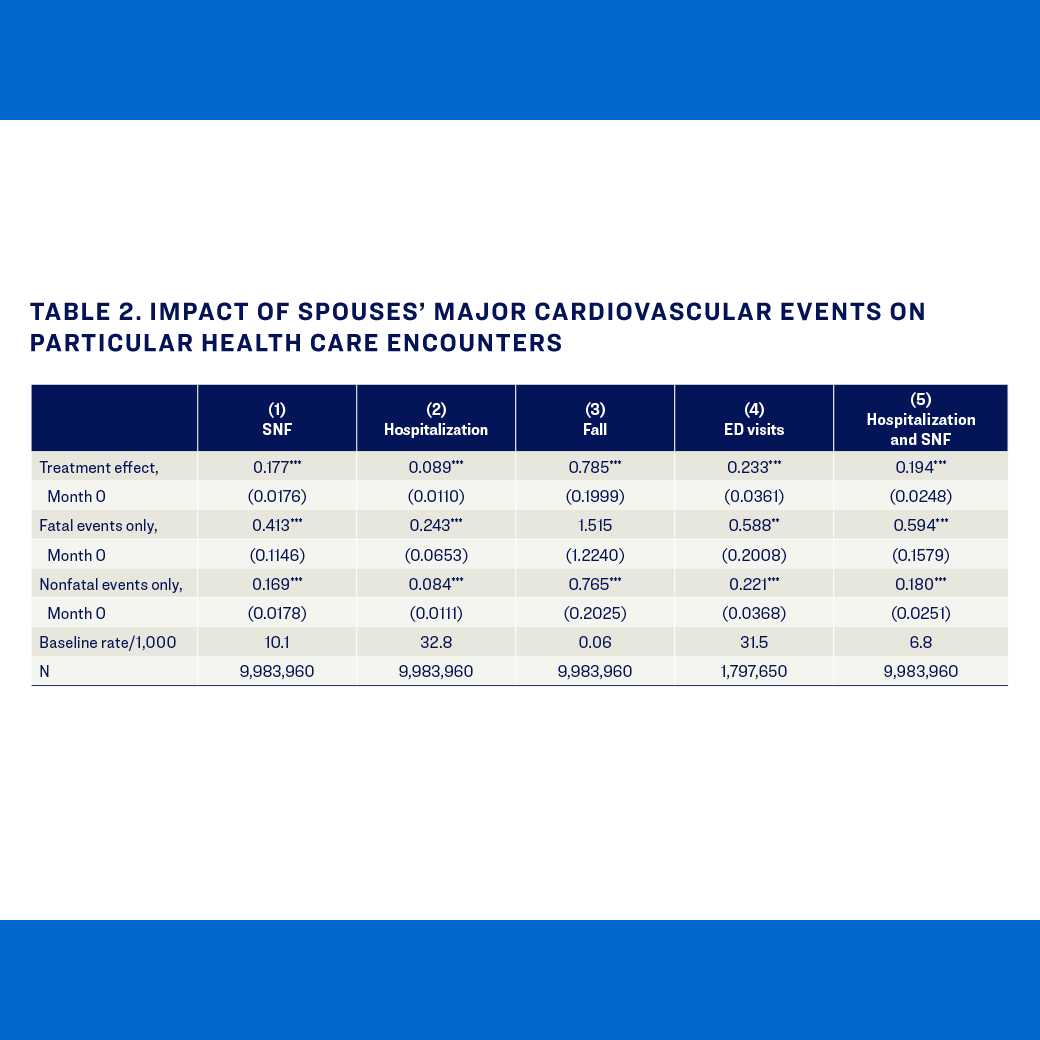
When one spouse suddenly suffers a heart attack or stroke, their partner becomes 18% more likely to require skilled nursing facility care. The research finds that approximately 90% of this increase represents a shift from informal to formal care rather than declining health. Moreover, spouses who lose their caregiver become significantly less sensitive to the price of formal care, willing to pay roughly four times more for skilled nursing services. These findings suggest demand for formal care at older ages is less driven by moral hazard and reflects genuine need rather than price sensitivity.
Key Insights
- A spouse's sudden incapacitation increases their partner's likelihood of entering a skilled nursing facility by 18%
- Approximately 90% of increased formal care use represents substitution from informal to formal care, while only 10% results from declining health
- Beneficiaries without an able spouse are willing to pay roughly four times more for formal care, demonstrating significantly less price-sensitive demand