New TIAA Institute-GFLEC research reveals that workers' expectations about how long they'll live in retirement directly influence their saving and planning behavior. Yet many Americans lack longevity literacy—the understanding of how long people typically live after reaching retirement age—putting their retirement security at risk.
Summary
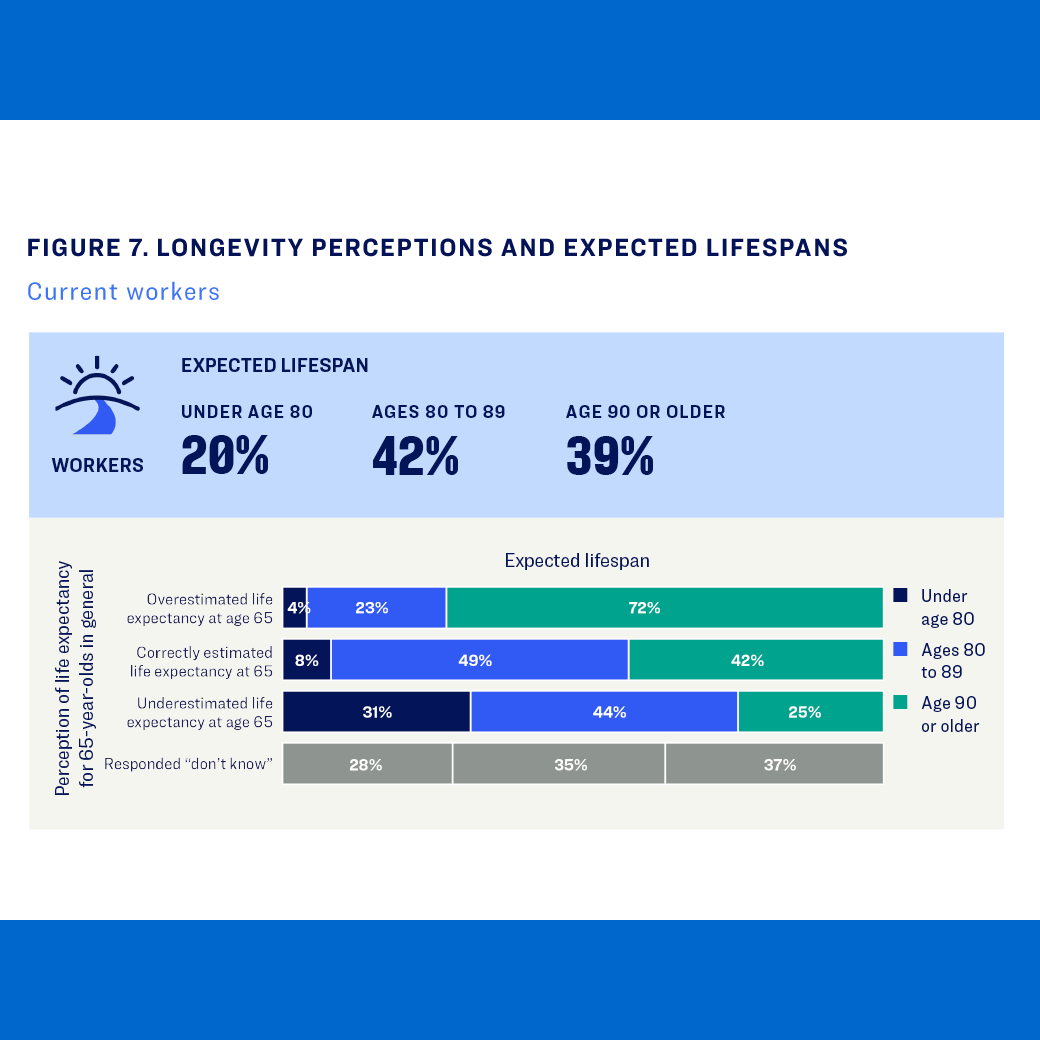
This fourth report in the Personal Finance (P-Fin) Index longevity series demonstrates that workers who anticipate longer retirements are significantly more diligent about retirement planning and saving than those expecting shorter retirements. Only 48% of workers expecting fewer than 10 years in retirement save regularly, compared to 71% of those anticipating 30 or more years. These expectations are strongly shaped by workers' perceptions of typical life expectancy at age 65—yet only 33% of U.S. adults can correctly identify this, while 32% underestimate it and 22% admit they don't know. This poor longevity literacy creates a critical retirement security challenge: workers who underestimate typical lifespans plan with horizons that are effectively "too short," save less diligently, and risk having inadequate financial resources during what may prove to be a lengthy retirement.
Key Insights
- Shorter expected retirements mean less diligent saving: Only 48% of workers expecting fewer than 10 years in retirement save regularly, and just 11% save more than 10% of earnings, compared to 71% who save regularly and 41% who save more than 10% among those expecting 30+ years in retirement.
- Poor longevity literacy is widespread: Only 33% of U.S. adults correctly understand how long a 65-year-old will live on average, while 32% underestimate it and 22% don't know—creating a foundation for unrealistic retirement expectations.
- Perceptions drive expectations: Workers' views of typical life expectancy at age 65 strongly influence their personal longevity expectations and retirement duration forecasts—80% of those who overestimate general life expectancy expect at least 20 years in retirement, while 59% of those who underestimate it expect fewer than 20 years.
- Planning gaps follow expectation gaps: Workers anticipating shorter retirements are less likely to calculate needed savings (27% vs. 51%), receive professional advice (12% vs. 29%), or consider income conversion strategies, with over 60% giving little or no thought to turning savings into retirement income.
- The challenge is systemic: Poor longevity literacy creates a self-fulfilling prophecy where inaccurate perceptions lead to shorter planning horizons, less saving, and increased risk of financial insecurity during potentially long retirements.